Do we really need 4K Television?

A question that has been asked many, many times; do we really need 4K television? And the answer is of course, NO….!
Let’s be honest; in an average living room with the tv at an average distance, high definition (HD) television is absolutely fine. It’s important to remember that 4K television has largely been invented in order to sell another new range of products to the same consumers who have already bought the previous incarnation. Bigger number, so it must be better, right?
The other thing to bear in mind, and this is the really fascinating aspect of this development in the industry, is that there are a great many people out there who simply don’t know the difference between all the different formats and what 4K or UHD or HD or SD actually means. I know from experience that there are people who own 4K televisions and therefore think they are watching 4K pictures. Whereas in reality, a lot of the time they are actually watching HD and even commonly, SD pictures, and are non the wiser. Which just proves a point.
Then we need to add the latest new feature set, HDR, into the mix; another high tech and largely misunderstood term to again confuse and encourage the buying public.
Let’s go back a bit to the advent of colour TV and the decades that followed:

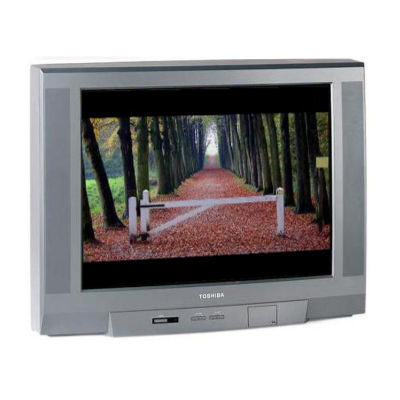
Colour TV in the UK using the 625 line PAL system started in 1967 on BBC2. 625 lines is known as standard definition or SD. We watched SD pictures from 1967 onwards, and although HD came along in 2006 offering 1080 lines, and then UHD in 2016, offering 2160 lines, we are still watching a surprising amount of content in SD, something that many viewers seem to be blissfully unaware of.
It has to be remembered that TV sets were a lot smaller back in the sixties and seventies than what we now take for granted, a 28″ screen being fairly typical, and so SD pictures looked a lot more acceptable on them than watching on a large sized HD or UHD / 4K set where the SD picture needs to be upscaled by a factor of two for a HD display and a factor of four for a UHD display. Not only is the picture upscaled, but the image is so much larger on a 42″ or 55″ or even a 60″ display, where the poor SD picture is truly shown up at it’s very worst.
Between SD and the advent of HD, there was an interim stage when we started making programmes in widescreen 16:9 aspect ratio rather than the traditional 4:3 aspect ratio. This was still delivered however within the 625 line PAL system and largely watched on 4:3 ratio televisions, which meant that the content had to be letterboxed in order to make it fit on the screen. In practice this meant a much smaller picture for most people which was rather a backward step in many ways.
When HD came along, it was a huge improvement. Suddenly you could actually see the detail in someones eyes, or the faces in a crowd. It was no longer fuzzy. Having worked with all of these formats, I remember many times having to work on SD productions after having been working on HD shows, and realising just how bad and lacking in detail the SD pictures really were. So many times we would comment, ‘did we really put up with that for so long?’.
I still own a 42″ Panasonic plasma and I love the picture it produces. I don’t like having a set that dominates the living room, and I find that it is a great size for viewing most content. I am also very against having a TV high up on the wall, where I find it is uncomfortable to watch. I often see sets mounted up above a fireplace which for me just looks so odd and leaves you with neck ache. A living room should always be a relaxing room to me. If you want a cinema room, then fine, have a huge screen. For me a screen which is at eye level when you are sitting on your sofa is fairly crucial.
Anyway, I digress…


… I was discussing the merits or necessity of UHD or 4K television over that of HD.
I remember working on one of the first UHD live broadcasts back in 2016. The move from HD to UHD caused an enormous amount of stress and in my view was totally unnecessary. Hardly anyone could watch in UHD back then and it really offered nothing more to the average viewer. Unless you were watching on an extraordinarily large screen, you wouldn’t know the difference.
HDR on the other hand is a very different matter. High Dynamic Range pictures really do offer something new and worthwhile. This has nothing to do with resolution or number of lines or pixels. It is a way of making pictures look far more like the way the human eye sees a scene rather than the limited contrast ratio that we have had until now.
Until you’ve seen a proper demonstration of HDR pictures, it’s difficult to appreciate just how good they are. Specular highlights for me are the thing that sets the pictures apart. If you imagine the sun glinting off a window, to the eye that is extremely bright, even though it is a reflection. In the old world of SDR pictures (Standard Dynamic Range) that reflection would just be a mushy white blob that was no brighter than any other bright part of the picture, and had no real definition or shape. In the HDR world, that specular reflection looks almost like it does to the eye; it is very bright and has perfect definition. Really quite astonishing when you first see it.
Having spent many years working with all of these technologies, and at the end of the day, all I practically need at home is the best resolution and dynamic range that I can appreciate; the best answer for me would be High Definition pictures in High Dynamic Range. That fufills my requirements. That’s not to say that 4K doesn’t have it’s place. As a capture format, for nature, wildlife and such like, where you want to capture the most detail you can, it is ideal. But it doesn’t need to be transmitted in UHD or 4K. That is just a numbers game to sell TV sets.
And it has clearly worked.