Adrian Turpin Blog
This is the Blog page for Adrian Turpin of The Light Direction Ltd. based in Kendal, Cumbria. Views expressed on any aspect of lighting, colour grading, broadcasting, theatre, television programmes, film productions, video productions or live stage productions are all purely personal.


Adrian has worked in the entertainment industry in many different roles. From Sound Designer looking after live sound re-inforcement and sound effects in the theatre, Follow Spot operator again in the theatre, through to Lighting Designer and Lighting Director or Director of Photography, both in the theatre and in television, most notably for the BBC both in the studio and on outside broadcasts, but also on live events and concerts out on the road for independent clients. Other specialised roles include intelligent, automated or ‘moving light’ design and programming and Catalyst media server video design and programming.
Yes, it really is November 4, 2026
Feel free to explore… have a browse through some of the musings inscribed here…
‘Peel the years back and see it all… written on the subway wall.’
words by Dion from the album ‘Yo Frankie’
Do we really need 4K Television?
A question that has been asked many, many times; do we really need 4K television? And the answer is of course, NO….!
Let’s be honest; in an average living room with the tv at an average distance, high definition (HD) television is absolutely fine. It’s important to remember that 4K television has largely been invented in order to sell another new range of products to the same consumers who have already bought the previous incarnation. Bigger number, so it must be better, right?
The other thing to bear in mind, and this is the really fascinating aspect of this development in the industry, is that there are a great many people out there who simply don’t know the difference between all the different formats and what 4K or UHD or HD or SD actually means. I know from experience that there are people who own 4K televisions and therefore think they are watching 4K pictures. Whereas in reality, a lot of the time they are actually watching HD and even commonly, SD pictures, and are non the wiser. Which just proves a point.
Then we need to add the latest new feature set, HDR, into the mix; another high tech and largely misunderstood term to again confuse and encourage the buying public.
Let’s go back a bit to the advent of colour TV and the decades that followed:

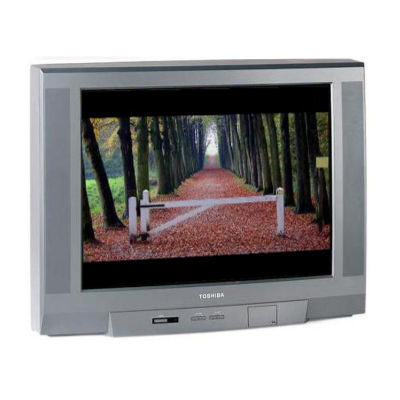
Colour TV in the UK using the 625 line PAL system started in 1967 on BBC2. 625 lines is known as standard definition or SD. We watched SD pictures from 1967 onwards, and although HD came along in 2006 offering 1080 lines, and then UHD in 2016, offering 2160 lines, we are still watching a surprising amount of content in SD, something that many viewers seem to be blissfully unaware of.
It has to be remembered that TV sets were a lot smaller back in the sixties and seventies than what we now take for granted, a 28″ screen being fairly typical, and so SD pictures looked a lot more acceptable on them than watching on a large sized HD or UHD / 4K set where the SD picture needs to be upscaled by a factor of two for a HD display and a factor of four for a UHD display. Not only is the picture upscaled, but the image is so much larger on a 42″ or 55″ or even a 60″ display, where the poor SD picture is truly shown up at it’s very worst.
Between SD and the advent of HD, there was an interim stage when we started making programmes in widescreen 16:9 aspect ratio rather than the traditional 4:3 aspect ratio. This was still delivered however within the 625 line PAL system and largely watched on 4:3 ratio televisions, which meant that the content had to be letterboxed in order to make it fit on the screen. In practice this meant a much smaller picture for most people which was rather a backward step in many ways.
When HD came along, it was a huge improvement. Suddenly you could actually see the detail in someones eyes, or the faces in a crowd. It was no longer fuzzy. Having worked with all of these formats, I remember many times having to work on SD productions after having been working on HD shows, and realising just how bad and lacking in detail the SD pictures really were. So many times we would comment, ‘did we really put up with that for so long?’.
I still own a 42″ Panasonic plasma and I love the picture it produces. I don’t like having a set that dominates the living room, and I find that it is a great size for viewing most content. I am also very against having a TV high up on the wall, where I find it is uncomfortable to watch. I often see sets mounted up above a fireplace which for me just looks so odd and leaves you with neck ache. A living room should always be a relaxing room to me. If you want a cinema room, then fine, have a huge screen. For me a screen which is at eye level when you are sitting on your sofa is fairly crucial.
Anyway, I digress…


… I was discussing the merits or necessity of UHD or 4K television over that of HD.
I remember working on one of the first UHD live broadcasts back in 2016. The move from HD to UHD caused an enormous amount of stress and in my view was totally unnecessary. Hardly anyone could watch in UHD back then and it really offered nothing more to the average viewer. Unless you were watching on an extraordinarily large screen, you wouldn’t know the difference.
HDR on the other hand is a very different matter. High Dynamic Range pictures really do offer something new and worthwhile. This has nothing to do with resolution or number of lines or pixels. It is a way of making pictures look far more like the way the human eye sees a scene rather than the limited contrast ratio that we have had until now.
Until you’ve seen a proper demonstration of HDR pictures, it’s difficult to appreciate just how good they are. Specular highlights for me are the thing that sets the pictures apart. If you imagine the sun glinting off a window, to the eye that is extremely bright, even though it is a reflection. In the old world of SDR pictures (Standard Dynamic Range) that reflection would just be a mushy white blob that was no brighter than any other bright part of the picture, and had no real definition or shape. In the HDR world, that specular reflection looks almost like it does to the eye; it is very bright and has perfect definition. Really quite astonishing when you first see it.
Having spent many years working with all of these technologies, and at the end of the day, all I practically need at home is the best resolution and dynamic range that I can appreciate; the best answer for me would be High Definition pictures in High Dynamic Range. That fufills my requirements. That’s not to say that 4K doesn’t have it’s place. As a capture format, for nature, wildlife and such like, where you want to capture the most detail you can, it is ideal. But it doesn’t need to be transmitted in UHD or 4K. That is just a numbers game to sell TV sets.
And it has clearly worked.

Lighting Vision Supervisor OR Lighting Console Operator
What’s the difference between a Lighting Vision Supervisor and a Lighting Console Operator or Generic Console Operator, sometimes otherwise known as a Board Operator or Board Op? People do ask. Production Managers and Producers like to know.
A Lighting Vision Supervisor is a BBC title. A Lighting Console Operator is a world wide generic title. There is actually a world of difference. And in typical BBC fashion, there is always a very good reason for everything.
If you have a Lighting Vision Supervisor on your show then you are in a very good position indeed. Certainly if it’s a proper LVS, trained at Evesham, brought up through the ranks, taken under the wing of an experienced and respected Lighting Director.
It’s actually very difficult in many ways to compare the two, as they are two very different entities. A bit like comparing a Ford Fiesta to an F Type Jaguar. Yes, they both have four wheels and an engine and will get you from A to B.
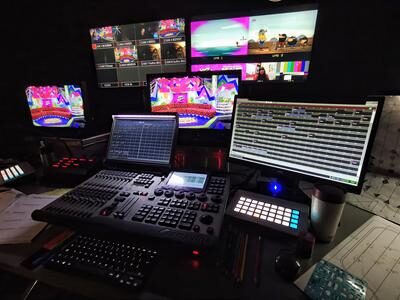

Now, don’t get me wrong. Like with anything in life, there are generalities and exceptions to the rule. There are some people who have a natural ability and understanding without the training. And likewise there are those that have the training but don’t have the understanding.
In general though, a BBC trained LVS has training and a lot of experience of cameras and camera line-up as well as the lighting skills. And again, you can have a lighting console operator, or generic board op as they are commonly known, who has buckets of lighting ability and knowledge as well as the technical knowledge of a particular lighting desk; and you can have another one with the same skills on paper and good knowledge of the lighting desk, but who has no real understanding of lighting. That doesn’t necessarily make them a bad console operator but if you understand lighting and you understand cameras, then you are already in a different league.
The big separator for me is when the person operating the cameras and the person operating and balancing the lighting are talking the same language. You might think that is a given in a professional environment. But sadly it is all too common for that not to be the case. The huge advantage of a BBC, or otherwise, trained Vision Operator and a BBC trained Lighting Vision Supervisor is that the LVS has all the training that the VO has had, and with a lot of additional experience to boot; hopefully that is the case anyway. The LVS and the VO are then working seamlessly as one cohesive unit. A lot does not even need to be said as they are both understanding each other without wasted words.
It’s also worth distinguishing here between the generic console operator and the moving light operator or programmer. Generally the LVS does the generic fixtures, the most important lighting balance in effect, as those are the lamps lighting the faces of the people. The modelling and balance on the faces is always the most important thing as in the world of TV we are always looking at people in big close up shots. The LVS can in fact do the moving lights whilst a less senior operator looks after the generic desk. That means that person has to program the moving lights and also supervise the running of the generic desk, but it can be done, and indeed has been done on many occasions.
The final pictures are the work of the Lighting Director, who is in overall charge, coupled with the contribution of the LVS and VO, both of whom are a vital part of the team and the creative process. If there is one weak link in that chain, the whole process can quickly fall apart. If you have the right people in that team then it can be a joy and an eye opener to watch.
Flying Pig Systems Archive Memories – The History of the Wholehog 2
The History of the Wholehog 2.
My first encounter with the Wholehog 2 came in September 1998 whilst at the PLASA exhibition at Earls Court. Mike Falconer was there demonstrating it. He was undoubtedly one of the best demonstrators in the business but even so, I think I knew within about two minutes that this was the desk I had been looking for, ever since the first time I had been involved with the programming of ‘intelligent’ moving lights back in 1993. Back then I was one of the very first people to have Vari Lite VL5’s in a TV studio in the UK. Studio A in Glasgow had a Galaxy of course, one of the best generic desks ever made, and a far cry from the JP20 which was the very first Strand desk I ever used, but it was also kitted out with a Gemini 2 with two playbacks. I remember painstakingly working out a system of groups that allowed me to program the VL’s and play back some quite complex music routines on those two playbacks. It was groundbreaking at the time and also challenging but a huge amount of fun.
Next came the MA Scan Commander which I used for the next few years from roughly 1994 to 1998. It was okay, but a bit awkward and very limiting. I did a lot of shows on that with VL5’s VL6’s and Golden Scan’s amongst others.
So when September 1998 rolled around and we were organising our annual pilgrimage to Earls Court, I was very excited by the news I had heard on the wires of the up and coming product from Flying Pig Systems.
I was certainly sold on the desk after Mike’s initial demonstration, but then of course you have to persuade the powers that be to also believe in your great idea to spend a rather large amount of money on a new product, particularly when I didn’t just want one of them, I wanted two… of course… one up in the gallery and one on the studio floor which also acted as the backup.
Anyway, Santa was very good to me that year and the new toys duly arrived in Studio A’s lighting gallery, along with a personal visit by Mike, at the very beginning of December, just in time to record that years series of ’50:50’, a full on children’s game and quiz show with multiple setups, lots of movers, LED’s and a variety of MIDI triggers coming from the various games being played out on the floor. Of course there was the obligatory music number and then I remember the quiz round where any one of 50 children on each team could be picked out at random and spotlighted using a Mac that was sweeping over their midst as the random number was chosen before settling on the chosen victim.
So, all in all it was quite an introduction to Hog 2 programming, learning the desk whilst doing a whole series of ‘as live’ recordings. It certainly was very reassuring to have Mike looking over my shoulder, answering my endless questions and helping me to successfully put the first show together. But what a joy it was to program and operate. That is the beauty of the Hog and Flying Pig. Having a desk designed by three people who actually understood lighting as well as computers made the Hog an absolute shining star in the ever evolving world of computerised desks, the vast majority of which were really unbelievably awful tools for attempting the job in hand. So a great many thanks are due to Captain Beaky and his band.
I used the Hog 2 for many years after that on countless numbers of shows and loved every minute of it. There was nothing that you couldn’t do with that desk. Creativity wasn’t compromised at all and that was the real beauty of it. The custom waveforms for the FX generator opened up even more opportunities to make effects for certain lamp types. I discovered a PC software program called, I think from memory, Midi Ox which allowed you to patch incoming MIDI notes to strings of outgoing notes that the Hog could understand. A remarkably useful tool that I made very good use of. I also remember building a custom made work surface for the second desk that I used for my programming on the studio floor, and the boys in the mechanical workshop built me an adjustable hood to keep the glare of the lights off the touch screens. The things you could do back then..!
I think it was another visit to PLASA one year when Hugh Davies-Webb introduced me to the equally exciting Catalyst media server that naturally integrated with the Hog by way of the fixture personalities and thus became a seamless part of the show. The possibilities, not to mention time spent programming, became endless.
A few years after my introduction to the Hog 2, and after a lot of interaction and feedback to the Flying Pigs, I did some beta testing on the Hog 3 in the autumn of 2002, although it would be a number of years later before I actually got to use the Hog 3 on a real show. I remember one year at PLASA twisting Beaky’s arm to give me one of the very few Hog 3 polo shirts that were in existence. And I still have that shirt to this day along with a lot of other Hog and Pig paraphernalia including my treasured cap that I always seemed to wear whilst programming, and the original manuals, t shirts, boxes and boxes of show discs and goodness knows what else. I am a hoarder and very sentimental, what can I say.
As far as I know, my two original Hog 2’s are still up at the BBC in Glasgow, lying in a room somewhere, sadly unused for many years now. It would be great to try and find them and see if they still work and to have another play with what is an iconic and life changing piece of lighting history.
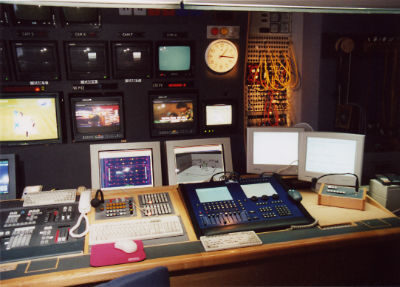
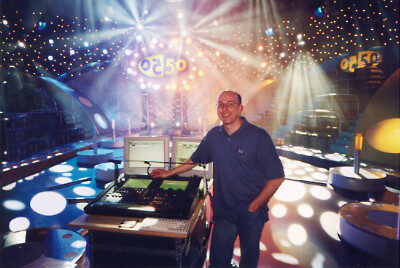
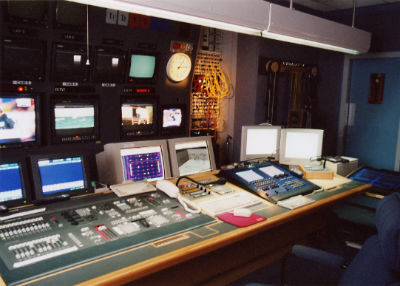

Photographs from top, left to right: Studio A Lighting Gallery at Queen Margaret Drive Glasgow in 2002 with the Hog 2 and the WYSIWYG computer. Adrian on the set of ’50/50′ with the WholeHog 2. Another view of the Lighting Gallery with the ADB Vision 10 generic desk foreground, the WYSIWYG computer and the Hog 2 with the DMX patch bay in the background.
This article was originally written in 2019 at the request of and for the Flying Pig Systems Archive website. It was never published due I believe to the pandemic.
DaVinci Resolve Grading Suite North West
Pictures from the inside of our edit and Davinci Resolve colour grading suite at the Old Smoke House in Kendal in The Lake District. We now have a Flanders Scientific DM240 reference monitor, choice of many colourists from around the world.
Colour grading is a vitally important part of the production and post production process. This is a great quote from Simon Reeve’s new book ‘Step by Step’ that is well worth a read. Here he describes the production process and the role of the various people involved in producing his fascinating and beautifully shot documentaries:
“Pound for pound, nothing improves a programme faster than a skilled Colourist sitting in front of a vast Star Trek sized console playing with scores of dials and sliders like Jean-Michel Jarre tweaking colours and shadows.”
We have graded a variety of projects here including a recent short documentary about Trees UK, a company specialising in tree surgery, based in Kent, and another documentary about Alistair Hugo, a catering and events company producing high end cuisine for the local area, again filmed in Kent. They were both produced, filmed and edited by Angus MacFadyen of AngyMac Films and were graded remotely.
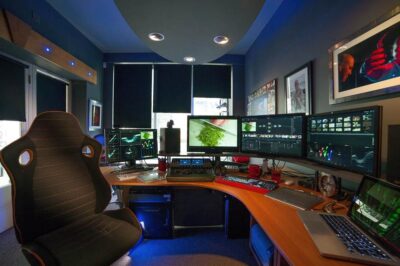
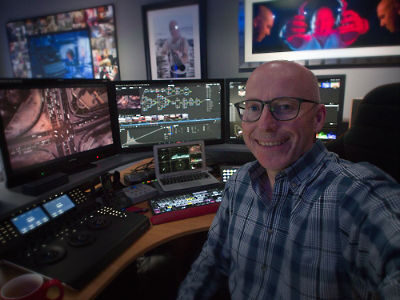
Colour grading is something that can be done remotely as it only requires the source footage and a project timeline to be delivered either on a hard drive by courier or made available for download. We are very fortunate in the Lakes to have lighting fast B4RN broadband which is ideal for this purpose. We can then grade the footage, and export it out of Resolve, return it back to the editor by courier or upload it. The graded footage can then be imported back into the editors project for completion.
Professional colour grading can completely transform a video, film or documentary, whatever the nature of the project.
Testing the Blackmagic Design Mini Ursa Pro
Colour testing the Blackmagic Design Mini Ursa Pro using a colour line up test chart from X Rite and waveform monitors from Divergent Media.
It’s important to know how the camera sees the colour information gathered through the lens. Every camera has it’s own colorimetry characteristics and colour matrix processing and so they will all see the same colours slightly differently. In a world where we are often shooting material in high dynamic range (HDR) using a film log curve rather than a standard video log curve, it’s even more important to be able to re-create a known, standard ‘look’ from the raw footage.
Knowing how the camera responds to colour as well as highlight and lowlight information helps the Director of Photography (DoP) know how to light and shoot a scene.
The more testing you can do with a camera the better. And if you are using different types of camera to shoot multiple angles or different scenes within a production and you need all the footage to match, then it becomes even more critical. When you are grading the footage and you can have created a ‘look’ that you like and you want this to be consistent across the production, then knowing what corrections to apply to the different cameras footage prior to applying the LUT for the actual ‘look’ that you want is crucial.
The science of colour, of colour capture, colorimetry, colour space and colour reproduction is a fascinating and much mis-understood area of television and film production.


I have to say, this camera has been an absolute joy. The images are beautiful when graded in the hands of someone who understands the process. It’s interesting because I often hear criticism of Blackmagic cameras and to be honest, the comments are usually not justified. They are often from people who are trying to use the cameras in an inappropriate fashion. These are film cameras, designed to capture every subtle hue and shade. But they are designed for the grading suite, not to be used ‘live’ straight out of the camera as many people seem to try doing. If you try and use them live, them no, they are absolutely not going to match a Sony 4300 or 3500 or a Grass Valley LDX86 or whatever. That is not a fair comparison as you are dealing with two very different products designed for very different purposes.
How to make a local business Promo Video
How do we go about making a commercial promo video for our local business? A question often asked by many business owners and a very good one too. How do we get a promo video made to show off our business to our clients, potential clients and customers. It can seem like a scary prospect.


Start at the very beginning, a very good place to start. If you’re looking to get a commercial promotional video made whether it be for the web, for your social media advertising campaign, for internal corporate use, or for a full blown commercial that will be broadcast, then you can come and talk to us.
We can talk you through the whole process, put your mind at ease, take your ideas and visions and turn them into a professional polished product.
Case Study:
Pappy’s Texas BBQ, a local company based in The Lake District but with a Texan pedigree and big dreams. We talked them through the whole process, took their ideas, their knowledge and obvious love of their business, and we produced a script and a shooting schedule. We filmed over three days, did the post production over another three days which included recording a voice over using our vocal booth in our custom built edit and colour grading suite in Kendal. We then sourced music, another voice over recording by an artist in America who did an authentic Texas accent, and some stock footage of Texas plains. The whole thing was edited and the footage graded, the sound mixed and some graphics added.
The result was a very happy client.
25 Years at the BBC
25 years ago today, I joined the BBC. There’s a lot of water gone under the bridge since then. I still clearly remember the first time I got off the tube on Byres Road and walked up to Queen Margaret Drive. Little did I know…
There have been some great times both at the Beeb and in Glasgow; a lot of happy times, some great friends made and life changing loves found and lost, some memorable trips, lots of laughs. A lot of fantastic opportunities have come along and a lot of dreams have been realised.
There have also been some sad times and, yep, a few tears along the road too. That’s all part of life’s great adventure.
Life has moved on during the last 6 years post BBC, and the road is still twisty and not always smooth. But it is still a lot of fun; challenging, interesting, demanding and fruitful. You never know which corner of the globe you’ll be sent next or what’s around the next corner.
I really don’t know where all those years have gone though….
‘It is certainly not a normal life, travelling and all that. But it is a nice, abnormal life.’
Linda Thompson, from an interview published in People magazine, January 1975.
